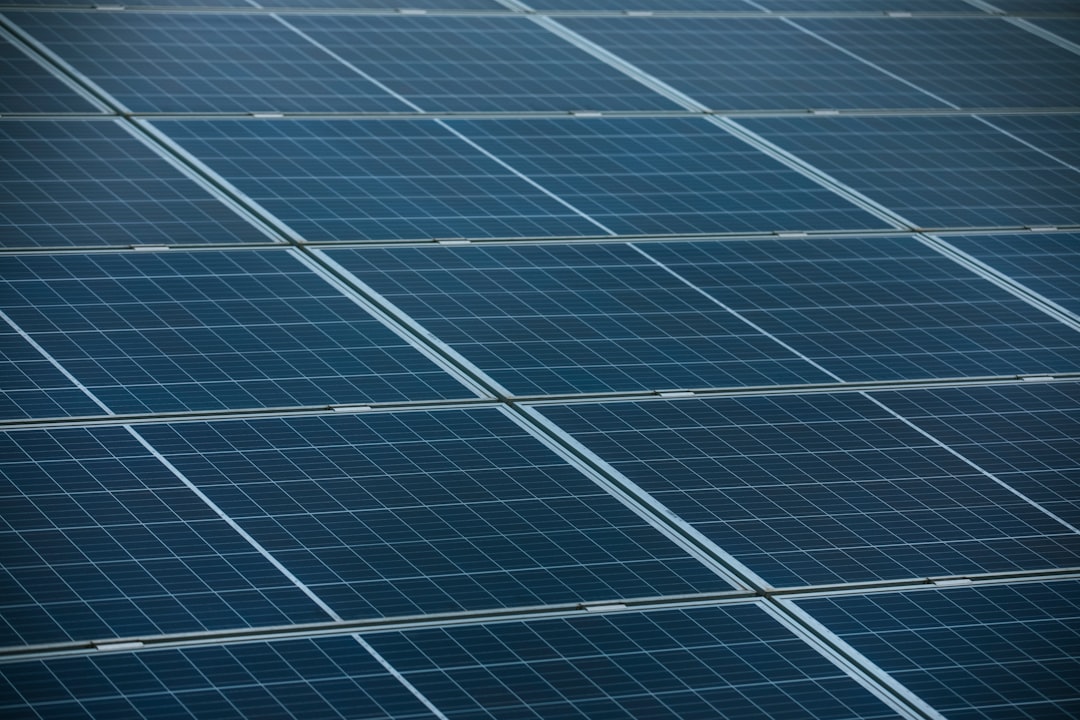
Not all solar panels are created equal. The technology behind the cells significantly affects efficiency, low-light performance, cost, and degradation rate. For UK homeowners, understanding the differences helps you evaluate installer quotes and make sure you’re getting the right panels for Britain’s specific climate.
The Three Main Types of Solar Panels
1. Monocrystalline (Mono) Panels
Monocrystalline panels are made from a single crystal of silicon, cut into circular wafers and then trimmed into the characteristic pseudo-square shape. The uniform crystal structure allows electrons to move with less resistance, resulting in higher efficiency.
Key characteristics:
- Efficiency: 20–24% (standard); 24–26% (premium TOPCon/HJT)
- Appearance: Uniform black or dark blue
- Performance in low light: Excellent
- Temperature coefficient: Better than poly (less output loss in heat)
- Cost: Moderate to high
The vast majority of UK residential solar installations in 2026 use monocrystalline panels. Brands include JA Solar, Jinko Solar, REC, SunPower, and Canadian Solar (all have mono ranges).
2. Polycrystalline (Poly) Panels
Polycrystalline panels are made by melting multiple silicon fragments together. The process is cheaper but produces a less uniform crystal structure with more grain boundaries, reducing efficiency.
Key characteristics:
- Efficiency: 15–18%
- Appearance: Speckled blue
- Performance in low light: Good but less than mono
- Temperature coefficient: Slightly worse than mono
- Cost: Lower than mono
Poly panels have largely been superseded by mono PERC technology in the UK residential market. They still appear in some commercial and utility installations but are rare in new UK residential quotes. If an installer quotes poly panels in 2026, ask why.
3. Thin-Film Panels
Thin-film panels deposit photovoltaic material in a thin layer on glass, plastic, or metal. The three main types are CdTe (cadmium telluride), CIGS (copper indium gallium selenide), and amorphous silicon (a-Si).
Key characteristics:
- Efficiency: 10–18% depending on type
- Appearance: Uniform, can be flexible or semi-transparent
- Performance in low light: Good (especially CdTe)
- Temperature coefficient: Best of all types
- Cost: Varies widely; manufacturing cost is low but efficiency disadvantage means more m² needed
Thin-film panels are used in specialist applications: curved surfaces, building-integrated photovoltaics (BIPV), and very large utility installations. CdTe (First Solar) dominates utility scale. For UK homes, thin-film is rarely the right choice due to lower efficiency requiring more roof space.
Efficiency Comparison 2026
| Technology | Efficiency Range | Best Example | UK Roof Area for 4kWp |
|---|---|---|---|
| Standard PERC mono | 20–22% | JA Solar DeepBlue 3.0 | ~19m² |
| Premium PERC mono | 21–23% | REC Alpha Pure | ~17m² |
| TOPCon mono | 22–24% | Jinko Tiger Neo | ~16m² |
| HJT (heterojunction) | 23–25% | Canadian Solar HiHero | ~15m² |
| Polycrystalline | 15–18% | (Obsolete range) | ~23m² |
| CdTe thin-film | 16–19% | First Solar Series 7 | ~22m² |
Why PERC, TOPCon and HJT Matter
These are advanced monocrystalline architectures:
PERC (Passivated Emitter Rear Cell): A rear surface passivation layer reflects unabsorbed light back through the cell for a second pass. Standard in quality panels since 2019. Adds 1–2% efficiency over standard mono.
TOPCon (Tunnel Oxide Passivated Contact): More sophisticated rear passivation, reducing recombination losses further. Offers 22–24% efficiency. Now the mainstream technology for 2024–2026 installations.
HJT (Heterojunction Technology): Combines crystalline silicon with amorphous silicon layers. Highest efficiency available commercially (23–25%) and best low-light performance. Premium cost — typically 15–20% more than TOPCon.
Which Is Best for the UK Climate?
The UK’s frequently overcast, diffuse-light conditions favour panels with superior low-light performance. In this regard, the order is: HJT > TOPCon PERC > Standard PERC > Poly. Thin-film CdTe also performs well in diffuse light.
For most UK homeowners in 2026, TOPCon monocrystalline panels from established brands (Jinko Tiger Neo, JA DeepBlue, Trina Vertex S+) offer the best balance of efficiency, price, and UK availability.
Frequently Asked Questions
Q: Do black panels (all-black mono) generate more electricity?
A: No — the all-black finish (black backsheet instead of white) is purely aesthetic. It may marginally increase cell temperature in full sun (reducing output by ~0.5%), but the difference is negligible in the UK’s temperate climate. All-black panels cost £50–£150 more per panel.
Q: How long do different panel types last?
A: Monocrystalline panels degrade at approximately 0.3–0.5%/year and are warranted for 25 years at 80% output. Polycrystalline degrades at 0.4–0.6%/year. Premium HJT panels may degrade at just 0.25%/year. Thin-film CdTe degrades at 0.5%/year.
Q: Is there a best brand for UK conditions?
A: JA Solar, Jinko, REC, Canadian Solar, and Trina are all reliable major manufacturers with strong UK track records. REC’s Norwegian manufacturing and European focus has made it a premium choice for quality-conscious buyers. Avoid unknown brands with no UK support infrastructure.
Q: Should I choose the most efficient panels available?
A: Higher efficiency matters most when roof space is limited. If you have ample roof space, the premium for HJT over standard TOPCon may not be worth it — the extra output difference is small. On a constrained roof, premium efficiency could allow a meaningfully larger system.
Q: Can I mix different panel types on one system?
A: Technically possible with microinverters or optimisers, but almost never recommended. Matching panels ensures consistent performance and simpler warranty claims.